
Across Canada, communities are navigating an era of unprecedented complexity.
Governments are investing billions of dollars annually in healthcare, education, housing, and community well-being. Healthcare spending alone now represents one of the largest portions of provincial budgets nationwide. Yet even with sustained public investment, municipalities, hospitals, and nonprofit organizations are under increasing pressure to deliver more—faster, and with greater accountability.
What has become increasingly clear through our work over the past 25 years is this: public funding alone is no longer sufficient to meet today’s community needs. Strategic philanthropy is no longer supplemental—it is essential.
Philanthropy in Canada is undergoing a fundamental shift. Donors are moving away from one-time, transactional gifts toward collective, sustained, and impact-driven giving. Foundations are prioritizing long-term outcomes and collaboration. Corporate giving is evolving into strategic community investment, with many companies seeking partnerships that align municipal priorities, nonprofit expertise, and private-sector resources. At the same time, technology—including data analytics and emerging AI tools—is reshaping donor engagement, stewardship, and transparency.
The communities that succeed in this environment share one defining characteristic: readiness.
BNP Inspire had the privilege of working with communities of all sizes across the country. Regardless of geography, the most successful projects are those grounded in disciplined planning, strong leadership, and clear alignment between public purpose and philanthropic opportunity.
At Dartmouth General Hospital Foundation, philanthropy played a critical role in accelerating access to care. The Lead On campaign raised $15.8 million to help fund the hospital’s first MRI, an orthopedic robot, and other high-priority equipment—demonstrating how private giving can complement public systems by advancing timelines and improving patient outcomes.
Similarly, the Hampton Summit Centre campaign secured more than $4 million in under twelve months for a multi-generational recreation facility. What made this campaign notable was not its size, but its execution: early feasibility work, strong municipal leadership, broad community engagement, and a compelling articulation of public benefit. The result was rapid momentum and widespread support.
These are not isolated successes. They reflect broader national lessons.
Across Canada, communities that invest time upfront—through feasibility studies, community consultation, volunteer leadership development, and donor alignment—consistently outperform those that approach philanthropy reactively. Preparation creates confidence, and confidence attracts capital.
BNP Inspire has supported partners in raising more than $4 billion across Canada, including over $160 million in Atlantic Canada alone. In New Brunswick, more than one-third of municipalities now engage philanthropy as part of their development strategy—an approach increasingly being adopted in other provinces as communities recognize the value of private-sector partnership in public-interest projects.
As Canada’s first B Corp-certified philanthropy consulting firm, BNP Inspire operates with the conviction that accountability, transparency, and measurable impact are fundamental to building trust. In a sector where confidence is the currency, credibility matters.
Looking ahead, We believe the future of community development in Canada will belong to those who integrate philanthropy as a core strategic function, not an afterthought. Philanthropy, when done well, does more than raise funds—it mobilizes people, strengthens civic pride, and helps communities deliver outcomes that endure.
The lessons emerging from communities across the country are clear. When vision, readiness, and partnership align, philanthropy becomes a powerful force for national progress.
About the author:
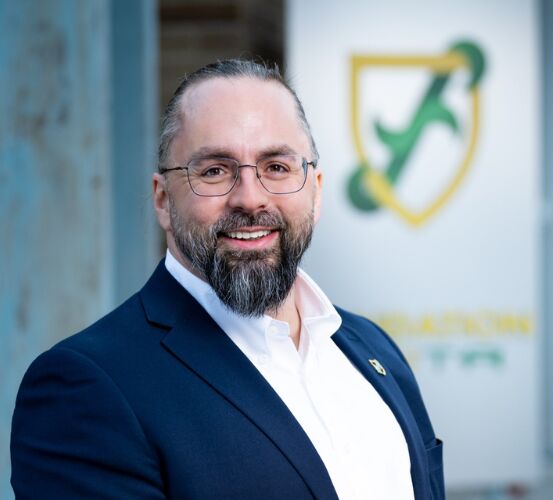
Moncef Lakouas, vice president BNP Inspire Atlantic, who holds a BAA with a concentration in finance and accounting, has over 10 years’ professional experience in governance, organizational management and philanthropy. Over the course of his career, he has held a variety of management positions, including Executive Director at BGC Moncton, President of the New Brunswick Multicultural Council, organizational design consultant, President of the Fédération des Étudiantes et Étudiants de l’Université de Moncton and member of the cooperative committee for the southeast region of UNI Coopération Financière.